1

Jeanne of the Marshes — Edition Insights
(0 User reviews)
205
Project Gutenberg
2003
Not confirmed
Detective and mystery stories; English fiction -- 20th century
Readers of public-domain and historical texts
Project Gutenberg digital edition
en
Edition facts
Words
80,493
Reading time
350 min
Text sections
10
This digital edition of Jeanne of the Marshes — Edition Insights is described by source-level measurements including 80,493 words, 5 hr 50 min estimated reading time, and 10 detected text sections.
The text analysis averages about 12.2 words per sentence, while the detected sections provide another way to judge how the source is divided.
Project Gutenberg metadata also associates the work with “Detective and mystery stories,” connecting these edition facts with the source record’s subject description.
Source:
Project Gutenberg record #4233
This editorial note examines the opening scenes of Oppenheim's novel, focusing on the Princess's controlled performance, the contrast between indoor tension and outdoor vitality, and the Duke's ironic commentary on physical versus intellectual power.
Editorial Edition Score
4.8/5
★★★★★
★★★★★
Calculated from edition completeness, EPUB availability, text structure and catalogue metadata. Not a user rating.
How this score is calculated
- Description quality20 pts
- Title & short description10 pts
- Source metadata20 pts
- Text length15 pts
- Chapters / structure15 pts
- EPUB file integrity20 pts
Total of 100 points, scaled to a 2.5-5.0 range. Editions with an empty description or a missing EPUB file are not scored.
Edition quality
Public-domain source text
Read the source text
The source text is kept in the dedicated reader, separate from this catalogue record and its commentary.
The novel opens with a scene of deliberate artifice: the Princess, feigning illness, adjusts her appearance before receiving Major Forrest. Her use of a powder-puff and mirror, combined with her command to turn lights on and off, establishes a motif of performance and concealment. The dialogue is crisp, with the Princess’s cold precision contrasting with Annette’s theatrical despair. This controlled domestic space soon gives way to a different register when Andrew De la Borne appears, fresh from fishing on the Dogger Bank. His physicality and directness disrupt the drawing-room atmosphere, and the Duke’s banter about ‘physical perfection’ introduces a thematic tension between brute strength and cultivated intellect.
Performance and Power in the Opening Scene
The Princess’s first words—‘did you misunderstand me?’—immediately signal a character accustomed to command. Her interaction with Annette is a masterclass in indirect authority: she never raises her voice, yet the maid is reduced to a state of ‘despair.’ The careful choreography of the scene—the darkened room, the mirror, the powder-puff—suggests that the Princess treats her own appearance as a strategic tool. When Major Forrest enters, he is described with clinical detachment: ‘his features were hard and lifeless. His eyes were just a shade too close together.’ The narrative voice remains coolly observational, refusing to align with any character’s perspective. This opening establishes a world where social encounters are tactical maneuvers, and every gesture carries weight.
Contrasting Registers: The Drawing Room and the Dogger Bank
Andrew De la Borne’s entrance shifts the novel’s tone abruptly. Where the Princess’s scene is suffused with incense and controlled lighting, Andrew brings the salt air of the North Sea. His dialogue is blunt—‘Chuck it!’—and his appearance is described in terms of physical transformation: hair cut, beard trimmed, ‘garments of civilization.’ The Duke’s teasing about ‘physical perfection’ and ‘a laurel crown’ is more than banter; it frames Andrew as a representative of a different kind of power. The conversation about work and money introduces a practical concern that contrasts with the Princess’s theatrical languor. Oppenheim uses these two opening scenes to establish a structural opposition between indoor intrigue and outdoor vitality, a pattern that likely recurs throughout the novel.
The Duke’s Ironic Commentary on Brains and Brawn
The Duke’s speech about ‘the faddists of the moment’ who claim ‘brains and genius have had their day’ is a key passage. It is delivered with evident irony—‘You do not believe in your own doctrines,’ Andrew replies—yet it also articulates a central question: what kind of power is most valuable? The Duke’s own position, as a man of intellect and influence, is contrasted with Andrew’s physical prowess. The dialogue is layered: the Duke’s flattery is also a critique, and Andrew’s modesty (‘I don’t want to become quite a clod’) reveals anxiety about his own place in the world. This exchange, occurring early in the narrative, sets up a thematic tension that may drive the plot, though the excerpts do not reveal how it resolves.
Readers should attend to how Oppenheim modulates pace between scenes of domestic tension and broader social commentary. The novel’s voice shifts from the clipped, performative dialogue of the Princess to the more expansive, reflective exchanges between Andrew and the Duke. These early chapters establish a pattern of contrast—between artifice and authenticity, between the drawing room and the wider world—that likely shapes the narrative to come.
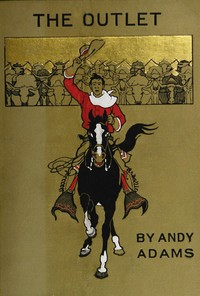
That rainy afternoon, Jeanne of the Marshes kept me in its quiet hush—the Princess’s fussy control felt like the gray outside. Funny how the Duke’s mockery of unused muscles led my thoughts to another tale of power flaunted wrongly. I pulled down The Outlet — Themes and Context almost without deciding, and the rain just kept falling.
There are no reviews for this eBook.
There are no comments for this eBook.
Reader reflection
How did this book work for you?
Your answers remain private and are stored only in this browser.
Your progress
0
/
10
2
How did the book work for you overall?
3
Is this a title you would suggest to others?
4
How easy was the book to follow?
5
Did it raise ideas you would like to talk about?
6
Would a second reading be valuable?
7
Was the book what you thought it would be?
8
How clear did the writing feel?
9
In one sentence, what did you learn?
10