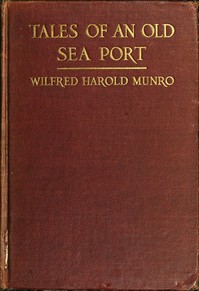
Tales of an Old Sea Port by Wilfred Harold Munro
Wilfred Harold Munro's Tales of an Old Sea Port is a love letter to Newport, Rhode Island, but it's not a simple one. Written in 1914, Munro acts as a storyteller, gathering the legends, records, and oral histories that defined the port's golden age. He doesn't give us a straight timeline. Instead, he paints vivid scenes from the 18th and early 19th centuries, letting us walk the wharves and peek into the homes of the people who lived there.
The Story
There's no single plot. Think of it as a series of character studies and dramatic moments that, together, show how a city works. We meet wealthy merchants whose fortunes rise and fall with the next ship. We see the harsh reality of the slave trade, not as a distant statistic, but as a brutal part of daily commerce. We follow the adventures of privateers—sailors hired to attack enemy ships—who blurred the line between hero and pirate. The shadow of the American Revolution looms over everything, splitting families and friendships as loyalties are tested. The 'story' is the life of the port itself: its noise, its smells, its greed, its courage, and its slow change over time.
Why You Should Read It
This book surprised me. I expected dusty facts, but Munro has a real eye for the telling detail—the price of a loaf of bread during a siege, the strange cargo of a returning ship, the gossip that spread through the taverns. He doesn't judge the past by modern standards, which lets you see the people as they were: complex and often contradictory. You get a real sense of how interconnected and fragile this world was. A storm, a war, or a bad trade deal could ruin a powerful man overnight. It makes history feel immediate and personal, not something that happened in a textbook.
Final Verdict
Perfect for anyone who loves narrative history or true stories about people and places. If you enjoy books like Nathaniel Philbrick's 'In the Heart of the Sea' or just love wandering through old historic districts imagining what life was like, you'll get a kick out of this. It's not a fast-paced novel, but more like a long, fascinating conversation with a knowledgeable old-timer. Keep in mind it's a book from 1914, so the language is a bit formal at times, but the stories themselves are full of life, drama, and a surprising amount of dirt under the polished colonial fingernails.