1

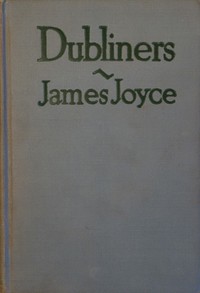
Dubliners — Edition Insights
(0 User reviews)
1975
Project Gutenberg
2001
Not confirmed
Short stories; Dublin (Ireland) -- Fiction
Readers of public-domain and historical texts
Project Gutenberg digital edition
en
Edition facts
Words
72,433
Reading time
315 min
Text sections
17
The catalog record for Dubliners — Edition Insights provides practical reading context through 72,433 words, 5 hr 15 min estimated reading time, and 17 detected text sections.
The text analysis averages about 15.3 words per sentence, while the detected sections provide another way to judge how the source is divided.
Project Gutenberg metadata also associates the work with “Short stories,” connecting these edition facts with the source record’s subject description.
Source:
Project Gutenberg record #2814
In Dubliners, James Joyce presents fifteen stories capturing ordinary life in early 20th-century Dublin. The excerpts reveal a precise, often bleak realism, with characters trapped by paralysis, poverty, and social constraints. Joyce's language is spare yet evocative, focusing on small gestures and unspoken tensions.
Editorial Edition Score
4.8/5
★★★★★
★★★★★
Calculated from edition completeness, EPUB availability, text structure and catalogue metadata. Not a user rating.
How this score is calculated
- Description quality20 pts
- Title & short description10 pts
- Source metadata20 pts
- Text length15 pts
- Chapters / structure15 pts
- EPUB file integrity20 pts
Total of 100 points, scaled to a 2.5-5.0 range. Editions with an empty description or a missing EPUB file are not scored.
Edition quality
Public-domain source text
Read the source text
The source text is kept in the dedicated reader, separate from this catalogue record and its commentary.
James Joyce's Dubliners opens with a boy studying a lighted window, whispering the word 'paralysis'—a term that echoes through the collection. The excerpts show a world of dim rooms, hesitant conversations, and characters caught between aspiration and inertia. In 'The Sisters,' the boy's fascination with the dead priest Father Flynn is shadowed by adult suspicion; in 'Ivy Day in the Committee Room,' political talk dissolves into silence and rain. Joyce builds these scenes through precise, understated detail: a spat-out pipe, a turned-up collar, an ivy leaf in a lapel. The catalog subjects—'Short stories; Dublin (Ireland) — Fiction'—are accurate but generic; the excerpts reveal a city of stunted hopes and unspoken resentments, where even the light is 'faintly and evenly' dimmed.
Paralysis as a Recurring Motif
The word 'paralysis' appears early in 'The Sisters,' where the boy narrator connects it to 'gnomon' and 'simony'—terms from Euclid and the Catechism. This triad suggests a world where geometry, religion, and bodily decay converge. The priest has suffered a stroke, and the boy's longing to 'look upon its deadly work' hints at a morbid curiosity that recurs across the collection. In 'Ivy Day,' the old man by the fire is physically and politically inert, 'gazing into the fire' while others debate. Joyce does not explain these states; he presents them through action and dialogue. The paralysis is not just physical but social: characters cannot escape their class, their city, or their own habits. The excerpts offer no resolution, only the weight of repetition—'night after night,' 'the same way, faintly and evenly.'
Voice and Silence in Dialogue
Joyce's dialogue is marked by hesitation and evasion. In 'The Sisters,' Old Cotter speaks in fragments—'something queer ... something uncanny'—and never delivers his theory. The boy's aunt and uncle fill the silence with pieties and platitudes. In 'Ivy Day,' the men trade opinions about politics and money, but their talk circles without conclusion: 'I hope to God he’ll not leave us in the lurch tonight.' The characters often speak past one another, as when Mr. Hynes argues for working-class representation while the old man mutters about 'the other tinker.' Joyce uses these exchanges to expose class tensions and personal frustrations. The silences are as telling as the words: the boy 'continued eating as if the news had not interested me'; the three men 'fell silent' after a sharp exchange. These pauses create a rhythm of withheld emotion, a hallmark of the collection's style.
The City as a Confining Space
Dublin in these excerpts is a city of cramped rooms and wet streets. The boy in 'The Sisters' observes the priest's house from outside, 'the lighted square of window' a fixed point in his nightly vigil. In 'Ivy Day,' the room is 'denuded,' its walls bare except for an election address; the fire loses 'all its cheerful colour' when the candlesticks are lit. Rain is a constant presence: 'imminent little drops of rain hung at the brim of his hat.' The characters are often indoors, yet the outside world intrudes through talk of politics, jobs, and debts. Joyce does not romanticize the city; he presents it as a network of constraints. The catalog subject 'Dublin (Ireland) — Fiction' is accurate, but the excerpts show a specific Dublin of 'stirabout,' 'spondulics,' and 'shoneens'—a place where even the hope of a royal visit is met with cynicism. The city is not a backdrop but an active force in the characters' paralysis.
Readers approaching Dubliners should attend to what is left unsaid: the gaps in dialogue, the unfinished sentences, the objects that carry weight (a pipe, a candle, an ivy leaf). Joyce's realism is not documentary but selective, each detail chosen to evoke a mood or a social condition. The excerpts offer only fragments of the collection's fifteen stories, but they reveal a consistent method: to show lives shaped by forces that are never fully named. Let the stories accumulate; their power lies in the connections between them.
There’s something about Joyce’s Dubliners that stays with you—that quiet ache of people unable to move, their lives paused mid-gesture. I found myself thinking of that same wistfulness while drifting through the open plains of A Waif of the Plains — Key Ideas to Explore. Different worlds, yes, but both hold that loneliness of a journey nobody asked for.
There are no reviews for this eBook.
There are no comments for this eBook.
Reader reflection
How did this book work for you?
Your answers remain private and are stored only in this browser.
Your progress
0
/
10
2
How did the book work for you overall?
3
Would you recommend this book to another reader?
4
How demanding did the text feel?
5
How strong was your personal connection to the text?
6
How understandable was the text?
7
Did you gain anything practical from the text?
8
How original did the book feel?
9
What is the main idea you are taking away?
10