
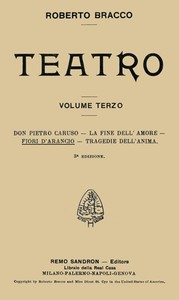
Fiori d'arancio by Roberto Bracco
I have a soft spot for rediscovering writers who've been overshadowed by time. Roberto Bracco is one of those. A contemporary of giants like Pirandello, his work often focused on the inner lives of women in a restrictive society, and 'Fiori d'arancio' is a perfect example.
The Story
The plot is deceptively simple. A young Neapolitan woman is engaged to a decent, if unexciting, man. The marriage is arranged, a good match that secures her future and pleases her family. Enter a different man—charming, passionate, and representing everything her safe fiancé is not. He awakens feelings in her she didn't know she could have. The entire play unfolds in the tension of this triangle. We watch her wrestle with the decision. Should she go through with the sensible wedding, symbolized by those orange blossoms, and live a life of quiet security? Or should she throw convention to the wind and pursue a love that promises passion but also uncertainty and social ruin? The drama is in her hesitation, her conversations, and the heavy silence of what goes unsaid.
Why You Should Read It
What struck me most was how Bracco gets inside his heroine's head. This isn't a loud, melodramatic story. It's a psychological portrait. You feel the walls of expectation closing in on her. The 'orange blossoms' of the title become less a symbol of celebration and more like a delicate, fragrant chain. Bracco doesn't judge his characters. The fiancé isn't a villain; he's just... fine. And that's almost worse! The play asks tough questions about happiness, security, and the cost of authenticity, especially for women who had so few options. Reading it, I kept thinking about how many people, even today, face versions of this same choice.
Final Verdict
This book is for you if you love character-driven stories that pack an emotional punch without needing grand events. It's perfect for readers of classic literature who want to move beyond the usual names and discover a nuanced voice. If you enjoy the intimate dramas of Henry James or the social observations of Edith Wharton, but set under the Italian sun, you'll find a friend in Roberto Bracco. 'Fiori d'arancio' is a short, powerful play that proves some conflicts of the heart are truly timeless.
Mark Wilson
1 year agoLoved it.
Brian Wilson
1 month agoI didn't expect much, but the narrative structure is incredibly compelling. I couldn't put it down.
Steven Jackson
9 months agoFast paced, good book.
Ashley King
1 year agoSurprisingly enough, the narrative structure is incredibly compelling. Highly recommended.






Linda Jackson
1 year agoMy professor recommended this, and I see why.