
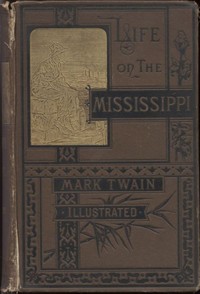
Life on the Mississippi by Mark Twain
Mark Twain's Life on the Mississippi is a book with a split personality, and that's what makes it so fascinating. It's not a straightforward novel; it's a blend of memory, travelogue, and social observation.
The Story
The first chunk of the book is pure magic. Twain recounts his years as a young man, desperate to escape his small-town printing job. He apprentices himself to a legendary riverboat pilot, Horace Bixby. We're right there with him as he memorizes the river's endless, shifting channels—every sandbar, wreck, and snag. He paints a picture of the pilot as a kind of river god, all-knowing and respected. This was the golden age of steamboats, full of danger, tall tales, and rough charm.
Then, the book jumps ahead. After the Civil War, Twain returns to the river as a passenger. The world has changed. Railroads are king, the steamboat trade is fading, and the river towns feel different. The second half is his travel diary from this trip, filled with his encounters, the stories he hears from locals, and his own witty, often cynical, observations on progress and nostalgia.
Why You Should Read It
You should read this because it's Twain at his most authentic. The humor is there—the chapter on trying to learn the river's shape is laugh-out-loud funny. But there's a real melancholy underneath. You feel his love for the wild, untamed river of his youth and his disappointment with the safer, more commercial waterway it became. He's grappling with a classic American question: what do we lose when we "civilize" something? The characters, from the formidable Bixby to the various oddballs he meets on his return journey, leap off the page. It’s less about a plot and more about feeling a time and place slipping away.
Final Verdict
This is the perfect book for anyone who loves great storytelling and a slice of real American history. It's for the reader who enjoys travel writing with a sharp edge, or memoirs that don't just look back with rose-colored glasses. If you liked the adventure in Huckleberry Finn but want the real, unfiltered story behind it, this is your book. It might feel a bit meandering at times—it is a journey, after all—but the view from the deck is absolutely worth it.
Kenneth Rodriguez
11 months agoAfter hearing about this author multiple times, the pacing is just right, keeping you engaged. I will read more from this author.
Daniel Lee
1 year agoFinally found time to read this!
Anthony Scott
5 months agoSurprisingly enough, it manages to explain difficult concepts in plain English. Absolutely essential reading.
Thomas Jones
7 months agoI had low expectations initially, however the clarity of the writing makes this accessible. Exactly what I needed.







George Lopez
10 months agoI have to admit, the narrative structure is incredibly compelling. I learned so much from this.