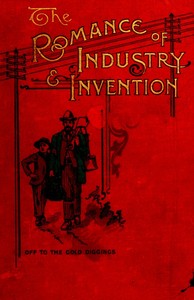
The Romance of Industry and Invention by Robert Cochrane
Let's be clear: 'The Romance of Industry and Invention' is not a new book. My copy is a weathered hardcover, and the author credit is simply 'By Robert Cochrane.' But don't let that fool you into thinking it's stuffy. This book is a time machine that drops you right onto the factory floors, into the cluttered workshops, and beside the drafting tables where modern America was being dreamed up, piece by piece.
The Story
The book doesn't follow one linear plot. Instead, it's a series of connected stories, almost like episodes. Each chapter focuses on a different industry or invention—textiles, steel, electricity, railroads, the telegraph. But Cochrane doesn't just list facts. He shows you the frantic race to build the first practical steamboat, the near-comical failures before someone got the sewing machine right, and the sheer chaos of early railroads. You meet characters like the determined mill girls, the rival steel magnates battling for supremacy, and the lonely inventors facing public ridicule. The 'story' is the collective human effort, with all its genius, rivalry, accident, and grit, that transformed a nation.
Why You Should Read It
I loved this book because it makes history feel immediate and personal. We often see the Industrial Revolution as a foggy period of smokestacks and progress. Cochrane pulls back the curtain. You feel the vibration of the first power looms, smell the oil in a new machine shop, and share the heartbreak of an idea that just won't work. It strips away the myth of inevitable progress and shows you how fragile and hard-won every advance was. It’s less about celebrating the finished product and more about admiring the struggle it took to get there. This focus on the human element—the 'romance' in the title—is what makes it so compelling.
Final Verdict
This is a perfect read for anyone who likes narrative history, biographies, or just great true stories. It's for the curious person who looks at an old factory building and wonders about the lives inside it. You don't need an engineering degree; you just need an interest in people and how they solve big problems. If you enjoy authors like David McCullough or Erik Larson, you'll find a similar, though older, charm here. It’s a hidden gem that reminds us that behind every machine, there was a person with a wild idea.